




How Real Estate Developers Should Think About Architecture and Identity

In most real estate markets, the gap between a good building and a great one is not structural. It is perceptual. The projects that achieve premium pricing, faster absorption, and stronger brand recognition are the ones that have been positioned as well as designed, and that positioning begins at the earliest stage of the project, not at the point of marketing.
This is the argument we make to every developer we work with: design and identity are not separate line items on a project budget. They are the same investment, and the return on getting them right compounds over the life of the asset.
Architecture as competitive positioning
A building is a physical argument for a particular set of values. The materials chosen, the proportions of the facade, the quality of threshold moments, the relationship between public and private space, all of these communicate something specific to the buyer or tenant before they set foot inside.
When those decisions are made without a clear positioning strategy, they tend to be made by default: whatever the market is producing, whatever the contractor can source, whatever fits the programme. The result is a building that is perfectly competent and entirely forgettable.
Our architecture practice is structured to prevent this. From the first brief, we work with developers to establish what the project is arguing, what it represents in the market, who it is for, and what it offers that comparable product does not. The architecture then serves that argument, rather than ignoring it.
The role of brand identity in property development
Brand identity for a real estate project is not a logo and some print materials. It is the full system of signals that shapes how the project is perceived before, during, and after purchase: the naming and positioning, the visual language, the sales environment, the digital presence, the wayfinding, the environmental graphics, the communications.
When this system is designed in alignment with the architecture, using the same logic, the same material references, the same spatial ideas, it reinforces rather than contradicts the building. When it is designed separately, it often works against it. See how we approach brand identity and environmental graphics as part of a single system.
What we bring to developers
Deuxign works with residential and commercial developers across New York, the Middle East, and Europe. We offer something that most studios cannot: a single team that handles architecture, interiors, and brand identity as an integrated programme.
This matters practically. It means fewer coordination meetings, fewer handoffs, fewer moments where one discipline is forced to adapt to decisions made by another. It means the building and the brand are designed by people who are thinking about both simultaneously.
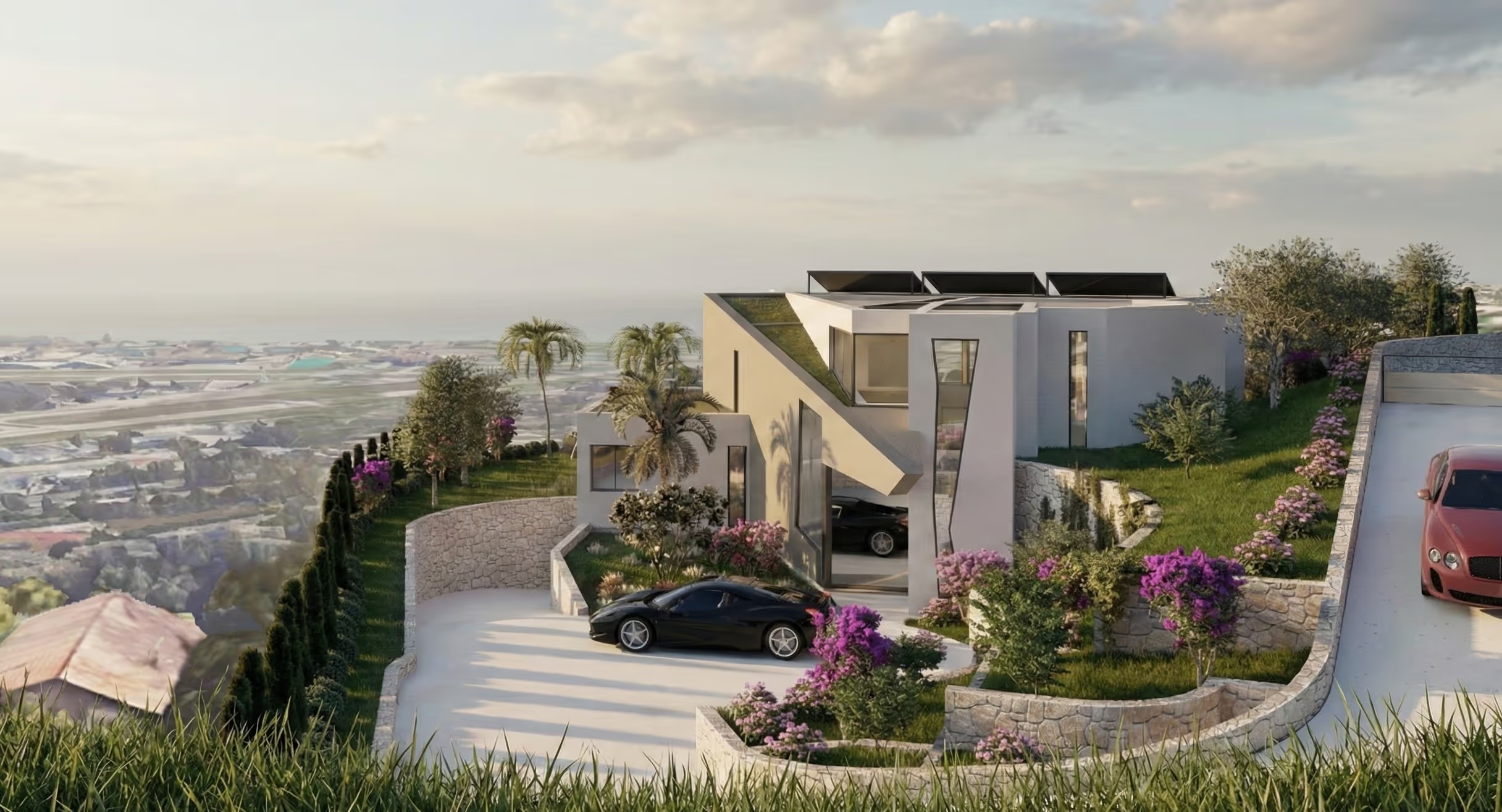
Villa Cystes, a contemporary luxury villa in Mandelieu-La Napoule 1km from Cannes, demonstrates what this integration produces: 1,470 square metres of landscaped grounds, panoramic sea views, and precision-designed interiors that read as a single coherent project from first render to final handover.
If you are at the early stages of a development and want to discuss how an integrated approach could serve your brief, we are available to talk.
More insights