



Mixed-Use Architecture: How to Design Commercial Buildings That Perform at Every Level
The skylines of cities like New York, Istanbul, and Doha are full of buildings that were expensive to build and forgettable to inhabit. They are technically accomplished. They meet their programmes. They satisfy their planning conditions. But they do not hold their position in the market, and they do not command premium pricing, because they do not communicate anything specific about who they are for or why they are different from the building next to them.
Mixed-use architecture, which combines residential, commercial, hospitality, retail, and public uses in a single development, is where this problem is most acute. A mixed-use building has multiple audiences, multiple revenue streams, and multiple brand relationships to manage simultaneously. The residential buyer wants something different from the retail tenant. The hotel guest wants something different from the office occupier. Designing a building that serves all of these audiences clearly, without contradiction, is one of the hardest problems in commercial architecture.
The design challenge of mixed-use development
The fundamental challenge of mixed-use design is sequencing. How does a visitor move from the public ground floor to the private upper levels without losing a sense of where they are and who the building is for? How does the retail environment communicate its own identity while remaining coherent with the residential brand above it? How does the hospitality component create an experience of arrival that is distinct from the office lobby it shares a podium with?
These questions are answered in the architecture, not in the marketing. The section of the building, the lobby design, the vertical circulation strategy, the material transitions between different uses, all of these are design decisions with direct consequences for how the mixed-use development performs commercially.
A commercial architect who understands this thinks about the brief in three dimensions simultaneously: the spatial dimension, how people move through and experience the building; the brand dimension, what each element communicates to its specific audience; and the financial dimension, how the design decisions affect absorption rates, rental yields, and long-term asset value.
What strong mixed-use design looks like in practice
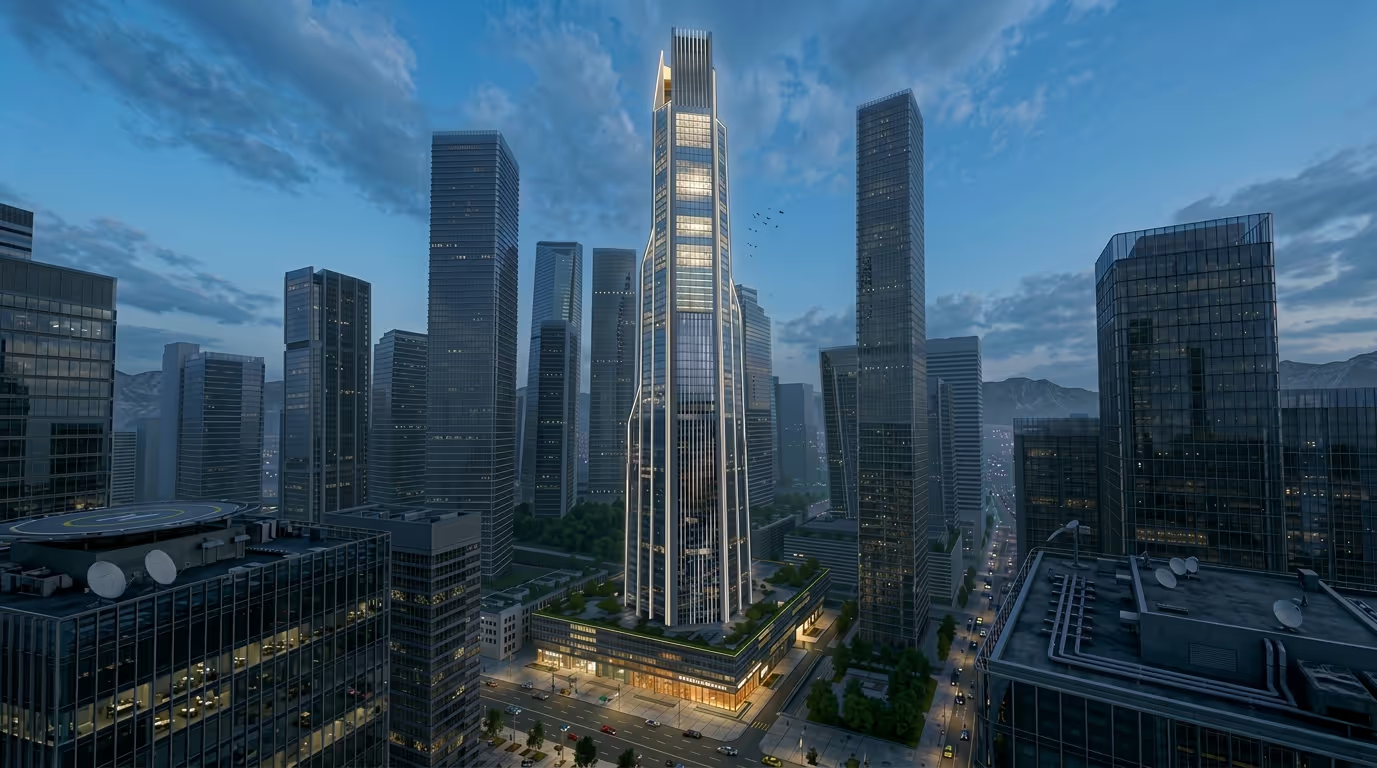
The Moscow City Tower is a useful case. A 370-metre landmark where premium residential floors sit above a commercial podium, designed on a Herzog and de Meuron master plan. The design challenge was to create a building that reads as a coherent whole at the city scale while delivering genuinely different experiences to residential occupants and commercial users at the building scale. The architecture resolves this through the section: the podium creates a distinct commercial zone with its own street presence and its own identity, while the tower above establishes a residential character that is premium, private, and clearly differentiated.
The Agripolis urban food market in Istanbul takes a different approach to mixed programming. An open-plan market hall in Atashehir where producer markets, ongoing trade, residential buildings, and rooftop farming are layered into a single urban system. Here the design challenge is not separation but integration: creating an environment where the different uses are visible to each other and mutually reinforcing, producing a kind of urban vitality that a single-use building cannot achieve.
Starting the mixed-use brief correctly
The most common mistake in mixed-use development briefs is treating the different uses as separate design problems to be resolved independently and then assembled. This produces buildings that feel like collections of parts rather than coherent wholes, and that fail to capture the commercial synergies that make mixed-use development valuable in the first place.
A stronger approach starts with the idea that unifies the development: what is this building arguing about how different kinds of people can share a single place? Every subsequent design decision, from the massing to the signage, is then tested against that idea.
Our commercial architecture practice works this way, in parallel with our brand identity and interior design practices, so that the idea at the heart of the development is expressed consistently at every scale and in every medium.
If you are planning a mixed-use development and want to discuss how an integrated design approach could serve your brief, we would be glad to hear from you.
More insights